
Welcome to
Philippines
Limestone lagoons, living heritage and warm island hospitality.
Here, the sea is not scenery between places; it is the thread that shapes the journey.
The route is written by water
The Philippines asks travellers to choose depth over collection. A rewarding itinerary links Manila’s history and food, the Cordilleras’ living rice terraces, Palawan’s karst seascapes and the Visayas’ island culture, with enough nights in each region to absorb ferry schedules, weather and local life.
CURRENT PLANNING NOTE
Every Philippines journey is reconfirmed against current entry rules, eTravel requirements, regional weather, sea conditions, domestic transport schedules and official travel advice before booking and departure.
Some routes require additional care because typhoons can disrupt travel and official advisories apply to parts of Mindanao and the Sulu archipelago. Holiday Factory will shape each itinerary around the traveller’s nationality, season and confirmed operating conditions.
Philippines
in context.
Distances that look short on a map may hide a flight, road transfer or ferry. A coherent Philippines itinerary begins with one regional anchor, adds no more than two or three complementary areas, and protects time for weather, tides and the unhurried hospitality that gives each stop its character.
Coral-rich seas, limestone karsts, volcanic slopes and cool highlands frame a culture shaped by trade, faith, family and regional identity. The reward comes from pairing headline landscapes with markets, food traditions and locally guided encounters.
The broad dry season runs from December to May, but rainfall, surf and sea conditions differ by island. Palawan and the western Visayas often suit clear-water plans from November to May; Siargao's surf season builds from July to November; cooler Cordillera nights favour light clothing.
Regional dishes, festivals, weaving, music and devotional traditions change as quickly as the language map. Explore Binondo's food lanes, Iloilo's heritage cooking, Cebu's street life and Cordillera craft with hosts who can explain local meaning.
Use flights for long jumps, ferries for selected inter-island links and private road transfers within each region. Early departures help with sea crossings, while two to four nights per base leave room for island weather and slower afternoons.
THE PRACTICAL EDITION
Philippines
reference notes.
01
Essentials
02
Plan well
03
Health & safety
04
Culture & etiquette
18 concise notes for a better-informed journey.
01
Essentials
The fundamentals to orient your journey.
Capital and gateways
Manila is the main international gateway; Cebu is a useful alternative for Central Visayas routes.
Time zone
UTC+8
Languages
Filipino and English are official; many regional languages are widely spoken.
Currency and payments
Philippine peso (PHP). Cards are common in cities and established resorts; carry cash for smaller islands and local markets.
Electricity
220V, 60Hz; plug types A, B and C. A universal adaptor is useful.
02
Plan well
Timing, entry and movement across the country.
Climate
Tropical and maritime. PAGASA defines a broad rainy season from June to November and dry season from December to May, but the country's four rainfall types create important regional differences.
Entry and visa
Kenyan passport holders are currently eligible for a 30-day visa-free visit with a passport valid for at least six months beyond the intended stay and a return or onward ticket. Visa requirements can change, so final requirements should be verified from official immigration or embassy sources before booking.
eTravel
Complete the official, free eTravel declaration within 72 hours before arrival and keep the confirmation accessible. Use only etravel.gov.ph or the eGovPH app.
Getting around
Long distances often require domestic flights; selected islands connect by fast ferry, while private vehicles and licensed local guides make regional touring smoother. Build buffers around separate tickets and same-day sea or air connections.
Weather and sea conditions
Typhoon season mainly falls from June to November. Monitor PAGASA and local port or airline notices; boats and island flights may change at short notice.
03
Health & safety
Practical precautions for confident travel.
Regional travel advice
Follow current official travel advice for every planned area. Holiday Factory will exclude or adapt routes affected by advisories, especially in parts of Mindanao and the Sulu archipelago.
Weather and sea safety
Treat typhoon, flood, volcanic, earthquake and sea-condition alerts as operational decisions. Follow local authorities, licensed operators and evacuation instructions without delay.
Health preparation
Discuss routine vaccines, mosquito-bite prevention and personal medication with a qualified travel-health professional. Use safe drinking water and pack reliable sun protection.
Medical care
Quality and access vary outside major centres and remote islands. Comprehensive insurance should cover planned activities, treatment and medical evacuation.
Emergency planning
Keep passport copies, insurer details, accommodation addresses and emergency contacts available offline, and leave sensible time between critical connections.
04
Culture & etiquette
The fundamentals to orient your journey.
Courtesy
Filipino hospitality is warm and conversational. Greet people politely, show respect to elders and use po or opo where locally appropriate.
Churches and sacred places
Dress modestly, lower voices and follow local rules in churches, mosques, cemeteries, shrines and community ritual spaces.
Shared meals
Meals are often communal and regional pride runs deep. Accept offered food graciously, ask about unfamiliar dishes and mention dietary needs early.
Photography
Ask before photographing people, ceremonies or homes, and obey restrictions at sacred, military, government and heritage sites.
Island stewardship
Use reef-safe sun protection, never touch coral or wildlife, carry out waste and follow local permits, tide guidance and protected-area rules.
Islands, highlands and heritage districts


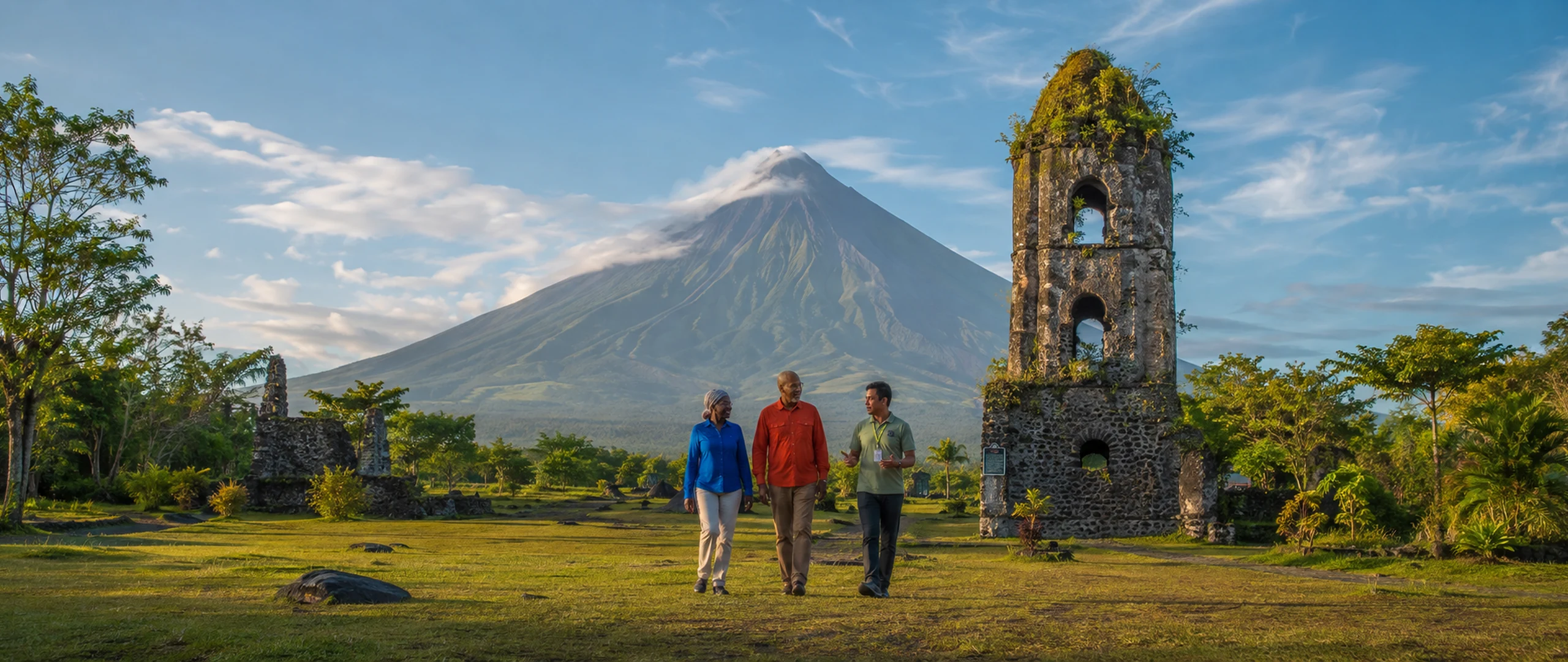



DON'T MISS
First light in an El Nido lagoon
PACKING NOTE
Pack for humidity, boats and highland cool
Why fewer islands make a richer Philippines itinerary
A SIGNATURE PRIVATE JOURNEY
13 nights. Four regions. Sea days and highland mornings.
Arrive in Manila with a recovery buffer, then explore Intramuros, the National Museum complex and Binondo with a private guide before the long road journey north.
Travel by private vehicle to a highland base and use two full days for guided rice-terrace walks, village context and mountain scenery. Road and weather conditions determine the exact Banaue, Batad or Sagada balance.
Return to Manila and fly to Palawan. Base in El Nido for two weather-dependent boat or lagoon days plus one flexible land day; choose Coron instead when access, interests or season make it the stronger fit.
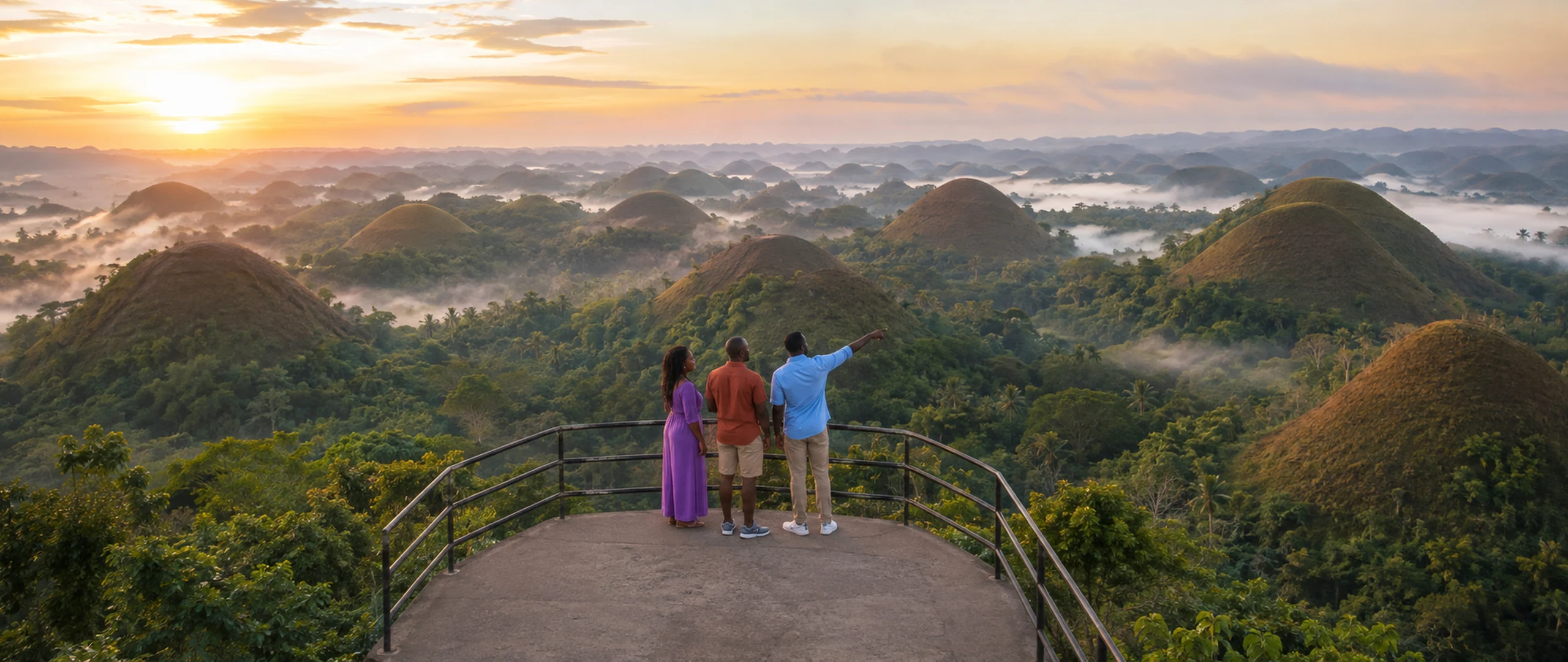
Continue by the best confirmed flight to Cebu, allow time for the city's heritage and food, then cross by fast ferry to Bohol for the Chocolate Hills, countryside and a relaxed Panglao finish.