
LAOS | DESTINATION GUIDE
Laos Travel Guide: Choose Depth Over Distance
Choose the parts of Laos that deserve your time, from Vientiane and Luang Prabang to karst country, the Plain of Jars and the southern Mekong.
8–12 nights
DESTINATION GUIDE
DEPTH OVER DISTANCE
Give each chosen region time to become intelligible
Before sunrise in Luang Prabang, market baskets begin filling with herbs and fruit while a line of saffron-robed monks moves along streets that are still cool from the night. Respectful observers stand back. Temple roofs catch the first light, and the Nam Khan slips quietly around the old town. A single morning already contains far more than a photograph.
That scene carries the central lesson of this Laos travel guide: choose depth over distance. Laos has a compact-looking map, yet its temple cities, limestone valleys, archaeological plateaux and southern islands ask for different kinds of attention. The most satisfying first visit gives each chosen region time to become intelligible instead of treating the country as a corridor between better-known neighbours.
THE CAPITAL
Vientiane rewards close looking
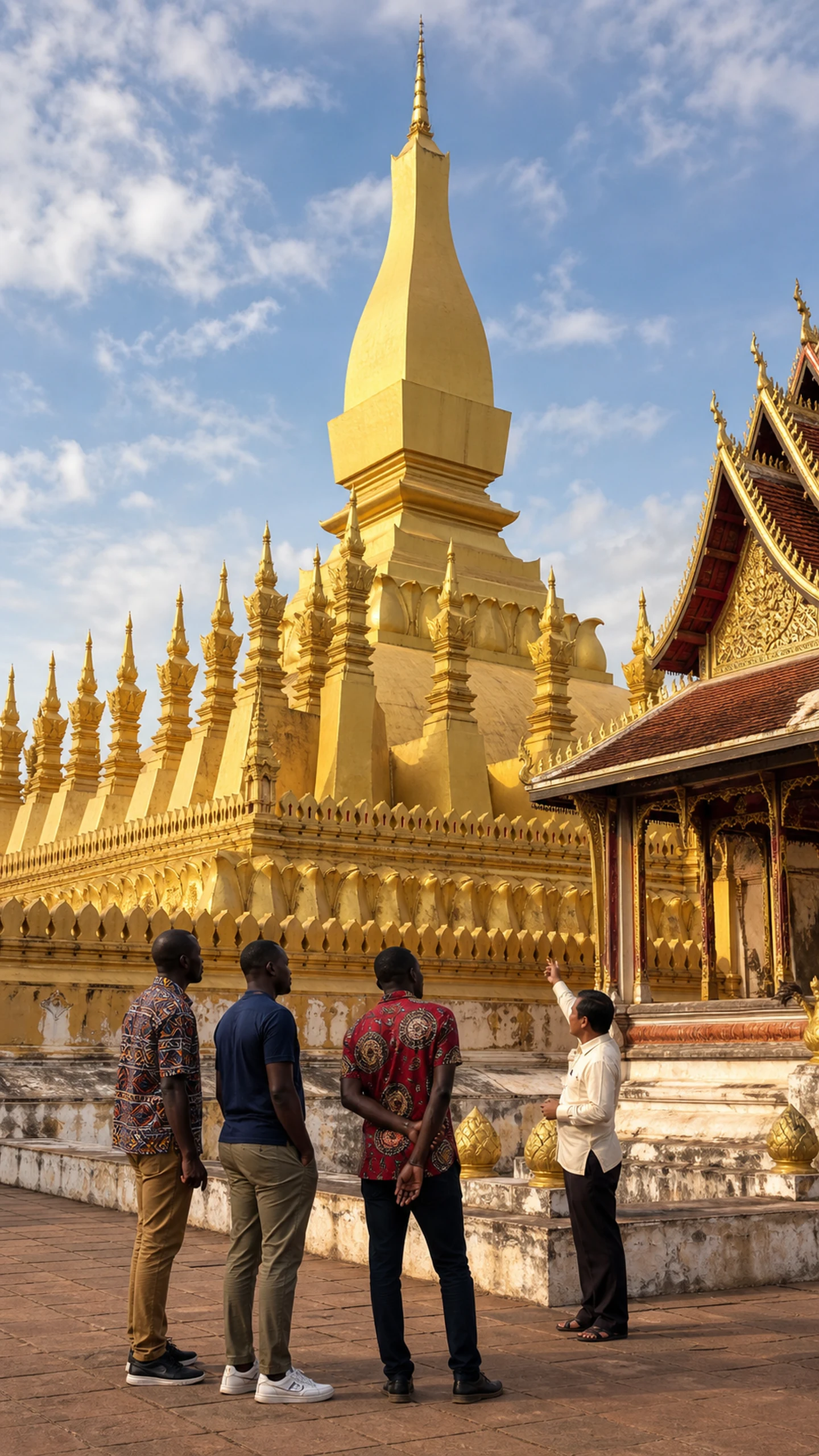
Vientiane is quieter than many Southeast Asian capitals, but quiet should not be confused with empty. Wat Si Saket surrounds its courtyard with galleries of Buddha images. Ho Phra Keo, once a royal temple, now provides museum context. Pha That Luang carries national and religious importance, while Patuxai gives a very different view of the capital’s twentieth-century civic story.
The most revealing day is not a race between monuments. Walk part of the old centre with someone who can point out traditional houses, former administrative buildings and the Lao and French influences in their design. Finish near the Mekong, where exercise groups, food stalls and families bring the riverfront into everyday life. Two nights allow the capital to serve as an introduction, not merely an arrival hall.
HERITAGE CITY
Luang Prabang turns heritage into daily experience
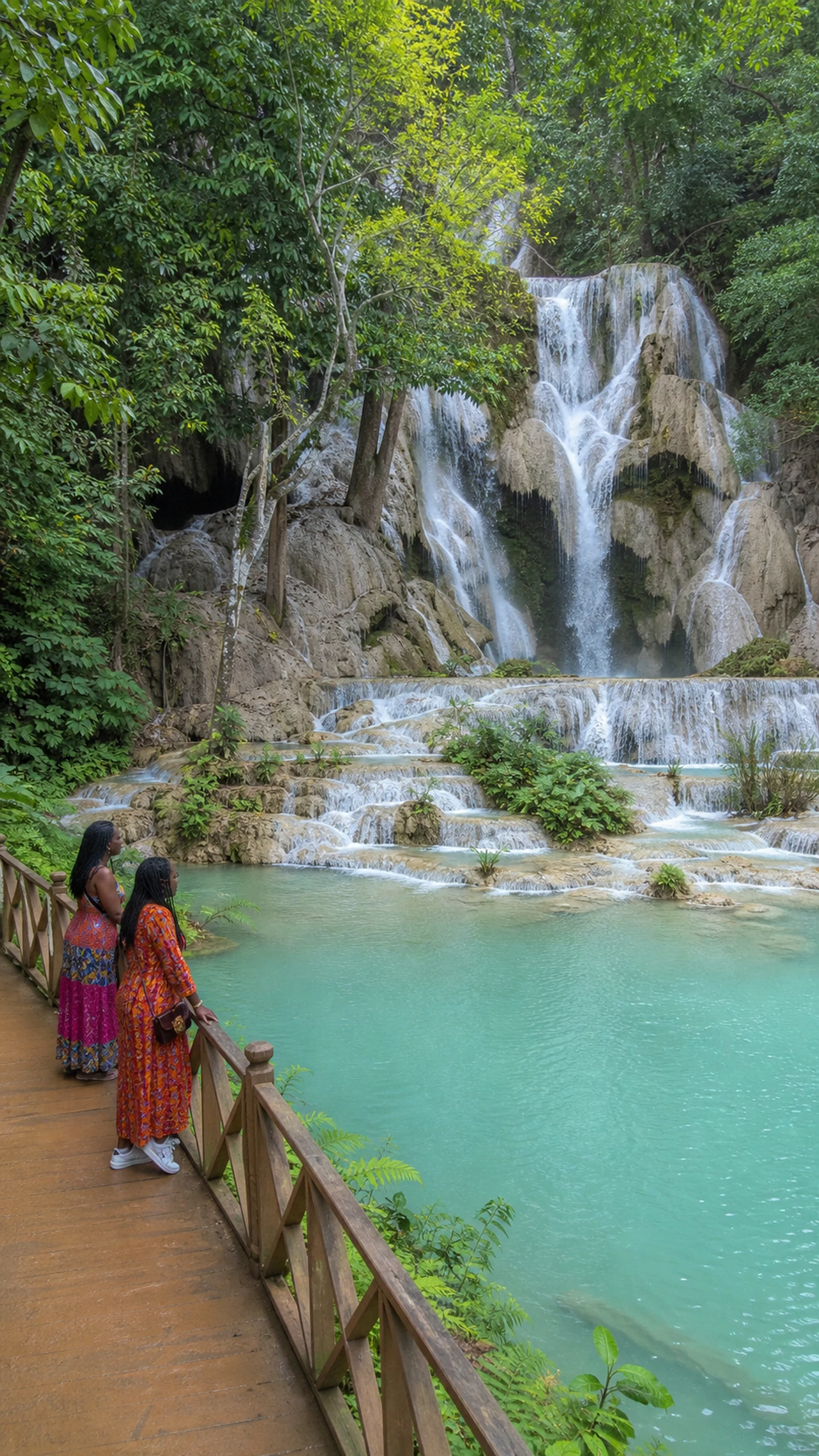
Luang Prabang occupies a peninsula between the Mekong and Nam Khan rivers. UNESCO recognition reflects the relationship between traditional Lao architecture and later colonial-era town planning, but the town’s importance is not confined to façades. Wat Xieng Thong, the former Royal Palace Museum, neighbourhood temples, markets and craft spaces keep religion, memory and working life close together.
Allow room for early and late hours. Mount Phousi changes with the light, Kuang Si adds forest and water beyond the town, and a market visit makes Lao ingredients easier to understand before dinner. The morning alms-giving ceremony is a living religious practice. Observe from a respectful distance, dress modestly, do not block the procession or use flash, and make an offering only with informed local guidance.
Three nights provide a strong minimum for travellers who want both the historic centre and its wider setting. Extra time can support a guided craft visit, a carefully chosen river excursion or a slower return to a temple that made more sense after the first walk.
KARST COUNTRY
Vang Vieng shifts the focus to limestone country
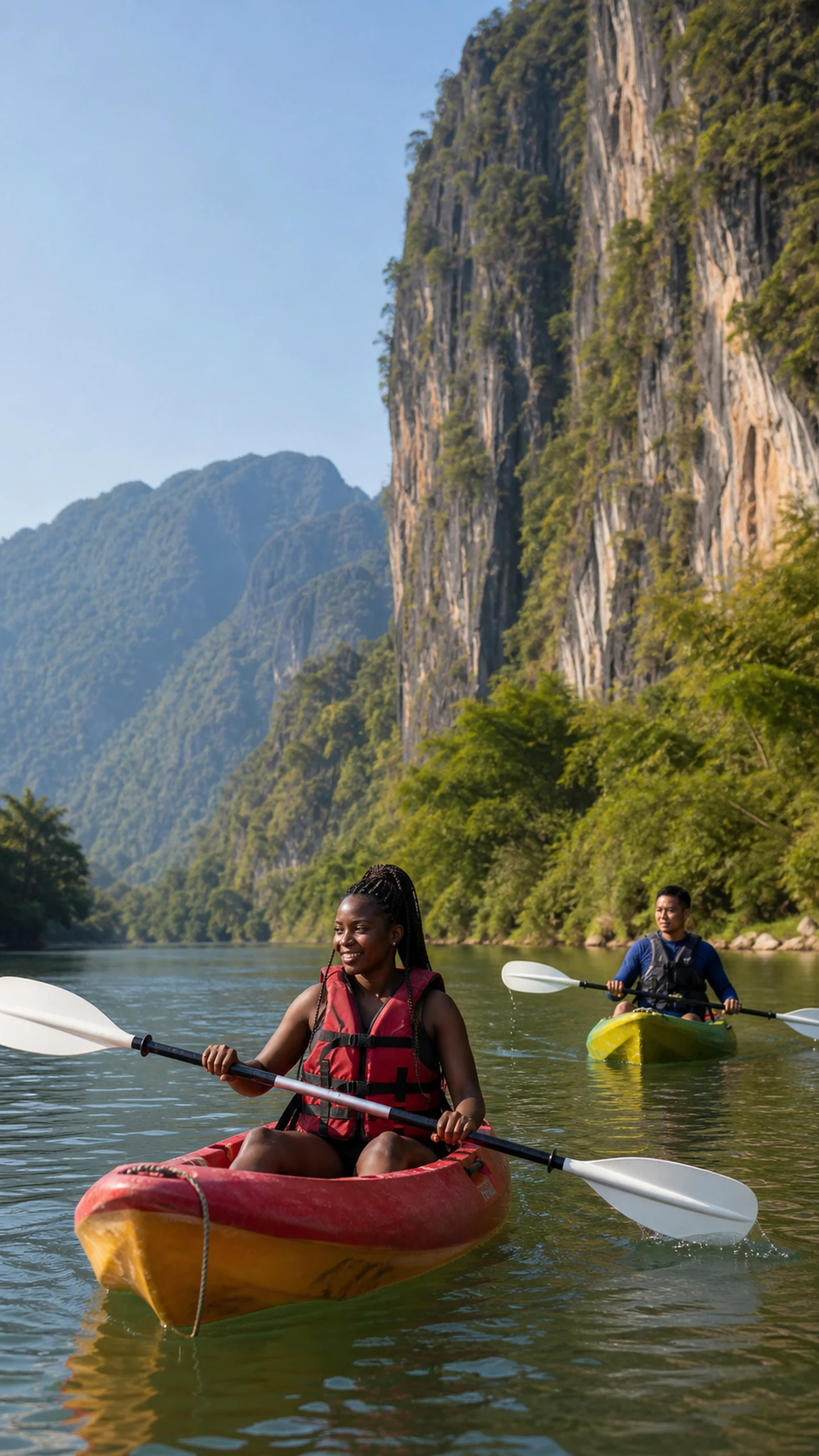
Vang Vieng is framed by steep karst towers, the Nam Song River and cave systems that make central Laos feel immediately more physical. Its strongest experiences are active but need not be extreme: a guided cave visit, a bicycle ride, a short hike or a well-managed kayak outing can reveal the shape of the valley without turning the day into a contest.
Choose activities according to weather, river level, fitness and the operator’s safety practice. Cave access can change after rain, and exposed viewpoints can be demanding in heat. Two nights make space for one principal outing and a second, gentler look at the landscape. The rail connection can make Vang Vieng easier to combine with Vientiane and Luang Prabang, but tickets and current schedules still need confirmation.
ARCHAEOLOGY
Phonsavan gives archaeology the time it deserves
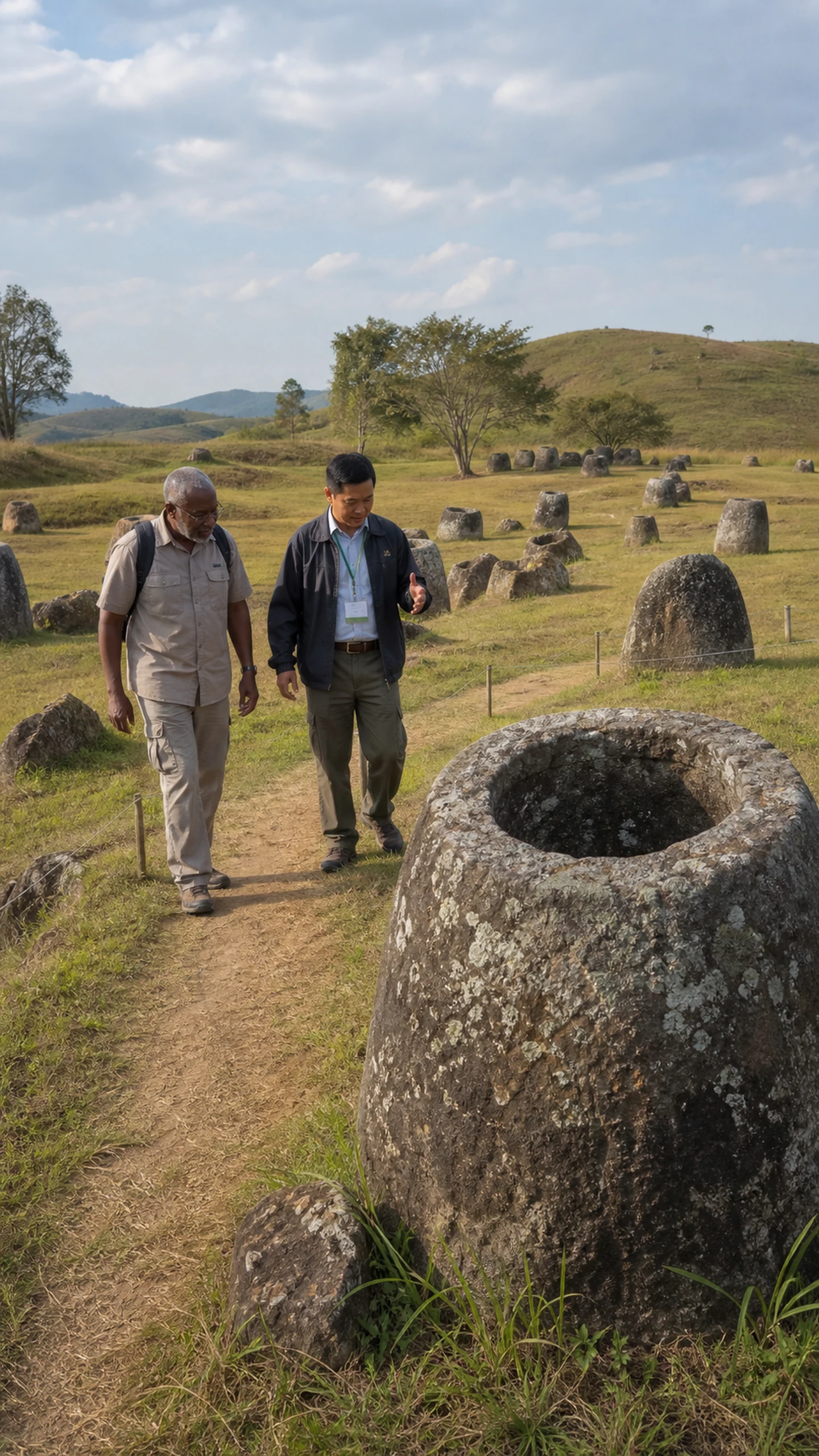
Around Phonsavan, the Plain of Jars changes the scale again. More than 2,100 stone jars are distributed across the UNESCO property’s serial sites, forming part of an Iron Age funerary landscape. The appeal lies not in one object but in the relationship between the jars, ridges, grassland and evidence of ancient ritual.
A qualified local guide can explain what research has established, what remains uncertain and how recent history affects access. Unexploded ordnance is a continuing hazard in parts of Laos, so visitors must remain on cleared, marked paths and follow site instructions. Phonsavan should be selected as a deliberate archaeological chapter, not squeezed into an already crowded transfer day.
SOUTHERN MEKONG
Pakse opens the southern Mekong
Pakse is the practical base for southern Laos. From here, roads rise towards the Bolaven Plateau, where elevation brings cooler conditions, waterfalls and coffee-growing landscapes around Paksong. Road and trail conditions vary with the rains, so the most useful plan chooses a manageable waterfall circuit or a focused farm-and-landscape day rather than collecting distant stops.
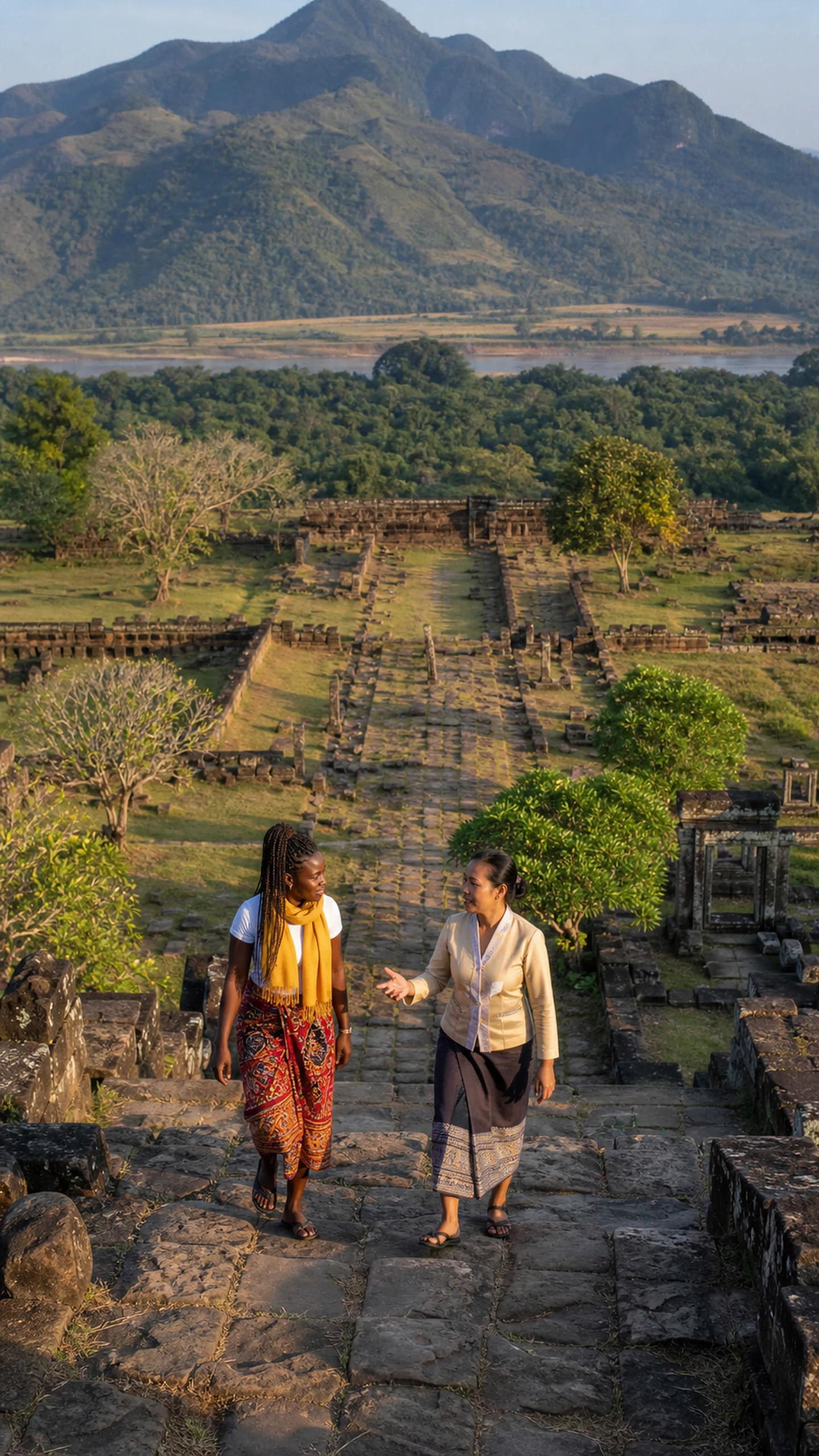
South of Pakse, Champasak town sits near Vat Phou, a pre-Angkorian temple complex within a cultural landscape that links sacred mountain, planned settlements and the Mekong plain. A guide helps make that long relationship visible. Nearby Don Daeng Island offers a more intimate counterpoint through bicycle paths, river views and community lodging when locally available.
Farther downstream, Si Phan Don—the Four Thousand Islands—spreads channels, sandbanks and inhabited islands across the Mekong. Don Khong Island suits travellers seeking a larger, quieter base, while Don Det Island and Don Khon Island bring more compact cycling and walking. Boat conditions, ferry arrangements and seasonal water levels should be checked for the actual dates. The south merits several nights because its value comes from river life, not speed.
FOOD AND CULTURE
Food provides another route into Lao culture
Sticky rice is central to Lao meals and commonly accompanies dishes such as laap, chilli-based jaew, green-papaya salad, soups, grilled fish or meat and abundant fresh herbs. Regional ingredients and spice levels vary. A market walk or guided food experience can help travellers recognise what appears at the table and order with more confidence.
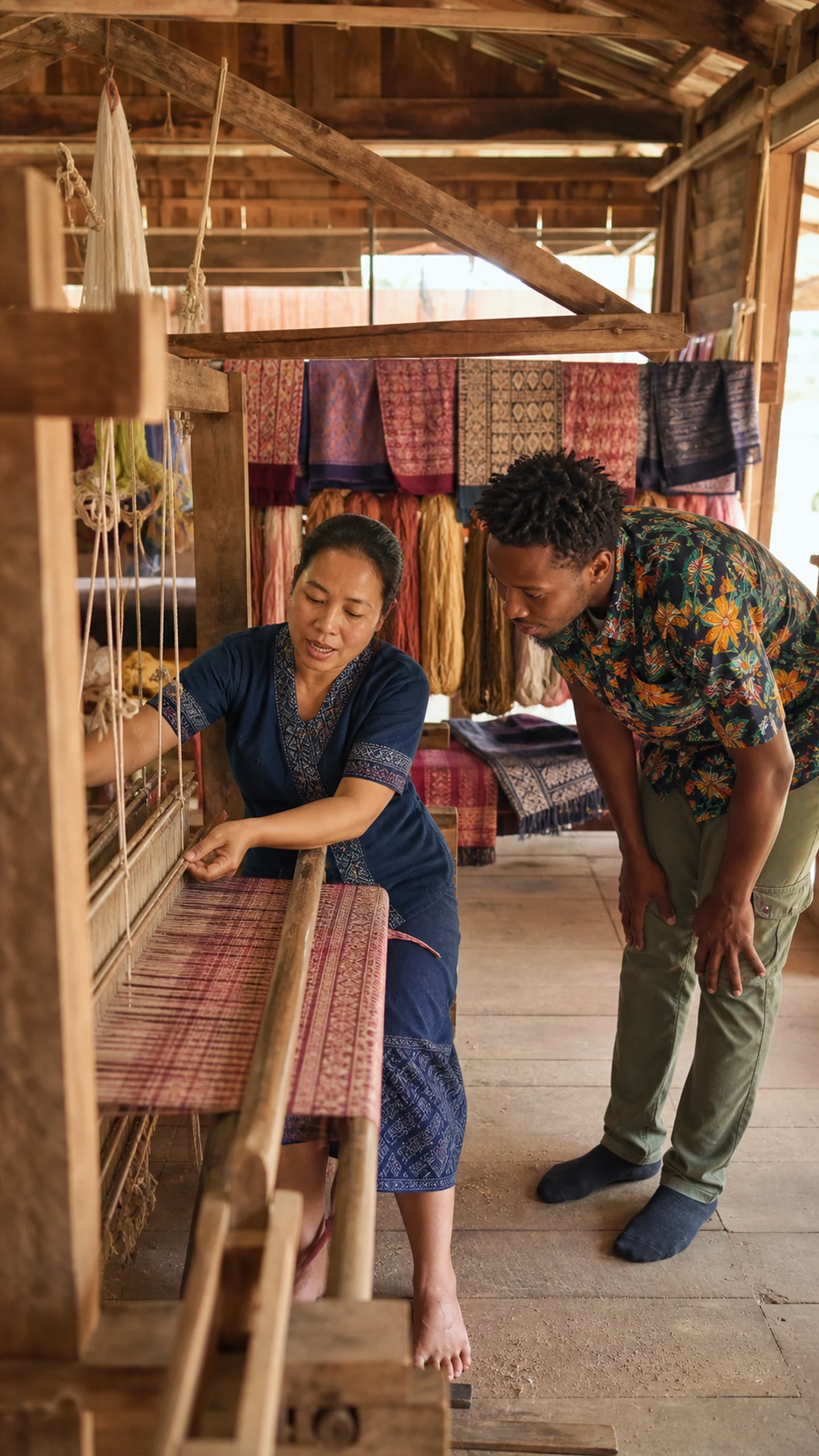
Meals also clarify etiquette. Shared dishes invite conversation, but visitors should follow the host’s lead, ask about allergens and dietary needs, and avoid treating markets or family kitchens as staged sets. When buying textiles or craft, choose recognised local makers and ask about the material and process. Thoughtful purchases can support skills that are part of living culture rather than souvenir production alone.
CHOOSE BY INTEREST
How Laos fits together
The northern and central visitor corridor is increasingly connected by rail, especially between Vientiane, Vang Vieng and Luang Prabang. Phonsavan sits outside that simple line and needs a separate road or air decision. Southern Laos is usually organised through Pakse, then divided between the Bolaven Plateau, Vat Phou and the Mekong islands.
FIRST VISIT
Keep the first route focused
For a shorter first visit, select the capital, Luang Prabang and one central landscape. This creates enough time for heritage, active nature and everyday encounters without turning the journey into a string of transfers.
A REGIONAL PRIORITY
Choose the chapter that matters most
Add Phonsavan when archaeology is a genuine priority. Choose the south when river life, Khmer-era heritage, waterfalls and islands matter enough to justify a separate regional chapter.
Combining north and south can be excellent with enough nights; forcing both into a brief stay usually replaces experience with logistics.
WHY THIS JOURNEY WORKS
Choose the Laos That Holds Your Attention
Give the right places enough time: temple cities for context, central landscapes for active discovery, the Plain of Jars for archaeology or the southern Mekong for river life and island communities.
CONNECT THE REGIONS
Build the route around geography
The northern and central visitor corridor is increasingly connected by rail, especially between Vientiane, Vang Vieng and Luang Prabang. Phonsavan and southern Laos need separate regional decisions.
Vientiane, Vang Vieng and Luang Prabang: use the rail corridor to connect the capital, karst country and the northern heritage city.
Phonsavan: treat the Plain of Jars as a separate road or air decision rather than forcing it into a transfer day.
Pakse and the south: divide time between the Bolaven Plateau, Vat Phou and the Mekong islands according to season and interests.
Protect time: domestic flights can connect regions, while road and boat sectors require conservative timing and current checks.
For a shorter first visit, select the capital, Luang Prabang and one central landscape. Add Phonsavan when archaeology is a genuine priority. Choose the south when river life, Khmer-era heritage, waterfalls and islands matter enough to justify a separate regional chapter.
PLAN WITH CONFIDENCE
Practical choices that protect the experience
Season, transport, health and etiquette checks protect the time set aside for discovery.
ENTRY
Confirm current requirements
Entry requirements depend on passport and routing. Reconfirm visa eligibility, passport validity and official immigration requirements before payment and again before travel.
CONNECTIONS AND CASH
Build in recovery time
Travellers from East Africa normally connect through an Asian or Gulf hub, so allow for a long flight and a four-hour time difference. Keep cash available outside major hotels and use recognised exchange points.
HEALTH AND WEATHER
Prepare for the conditions
Heat, humidity, insects and uneven paths call for sun protection, suitable footwear, water and personal travel-health advice. Seasonal rain can affect roads, caves, river activities and waterfalls.
TEMPLES AND WILDLIFE
Travel with respect
At temples, cover shoulders and knees, remove shoes where instructed, keep voices low and ask before photographing people. Choose conservation-led wildlife programmes that avoid riding, staged bathing or forced handling.
LET FEWER PLACES REVEAL MORE
Let fewer places reveal more
Laos becomes clearer when a traveller gives one region enough time to move beyond first impressions. Vientiane explains the country’s civic and religious vocabulary. Luang Prabang brings heritage into daily life. Vang Vieng opens the karst landscape, Phonsavan adds archaeological depth, and the south follows water, temple geography and island communities.
Holiday Factory can shape a Laos holiday around the questions that matter most to you—living heritage, archaeology, active nature, food, photography or quiet river time—then test every connection against season, energy and current operating conditions. Tell us which part of Laos holds your attention, and we will build the rest around it.